The short definition
An animal phone case can use its subject in three distinct ways: as a portrait, as part of a habitat scene or as an abstract print. A portrait creates an immediate character and emotional focal point. A habitat composition spreads attention across the animal, plants, water or landscape. An animal print removes the face entirely and turns recognizable markings into rhythm. Choosing among them is really choosing what you want people to notice first.
Start with the relationship, not the species
Liking cows, dogs or marine life is a good reason to open a product page, but it does not tell you how the case will behave as an accessory. The same animal can feel sweet, dark, naturalistic or graphic depending on the crop, surrounding objects and color treatment. A close face asks for attention. A creature placed inside a dense environment rewards a slower look. Spots and stripes register before you think about the animal that inspired them.
Look at your phone from arm's length and ask what survives. Is it a pair of eyes, a blue field or a high-contrast repeat? That first read matters because a phone spends more time moving through daily life than sitting under perfect product-page lighting. The smaller details should enrich the design, but the overall idea needs to work before those details are visible.
Portrait: choose a character with a clear mood
The Highland Cow Black Rose design is built around a single forward-facing character. The rounded eyes, pale muzzle and centered pose make the animal approachable, while the black flower crown, dark clothing and small heart details pull it away from a purely pastoral look. This is not wildlife documentation; it is a styled character portrait with a dark-romantic point of view.
Portrait cases work when you want an obvious subject and do not mind the phone becoming a conversation piece. Check the expression as carefully as the animal. Large eyes, direct eye contact and accessories make a portrait feel playful or illustrative. A side profile, limited palette or less symmetrical crop can feel quieter. Also notice where the face sits relative to the camera block. Here, the flowers occupy the upper zone while the cow's eyes and muzzle remain lower and centered, so the identity does not depend on the corner that the camera removes.
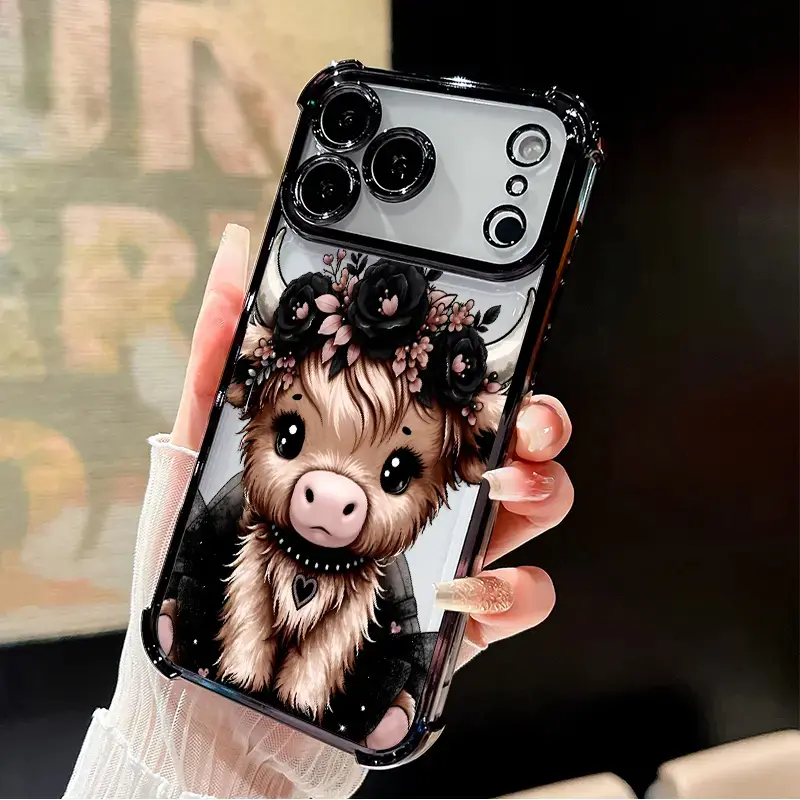
Highland Cow Black Rose Phone Case
A direct animal portrait made specific by oversized eyes, black florals and a centered character pose.
View this exact option →Habitat: let the animal share the story
The Blue Whale Shark Reef design does not isolate one animal against a blank ground. Whale sharks, a turtle, a ray, coral and other sea-life details overlap across a cool blue composition. The larger whale shark anchors the lower half, but the eye keeps moving through the surrounding species and plant forms. The case reads as a miniature ecosystem rather than a mascot.
A habitat design suits someone who likes discovery and layered illustration. It also gives you more colors and shapes to connect with an outfit: navy edging, pale blue space, denim, silver jewelry or a cool gray bag can all pick up part of the palette without matching every detail. The tradeoff is visual density. If your clothes already carry a complicated print, the case may compete with it. Pairing a habitat scene with simpler fabrics gives the tiny world room to register.
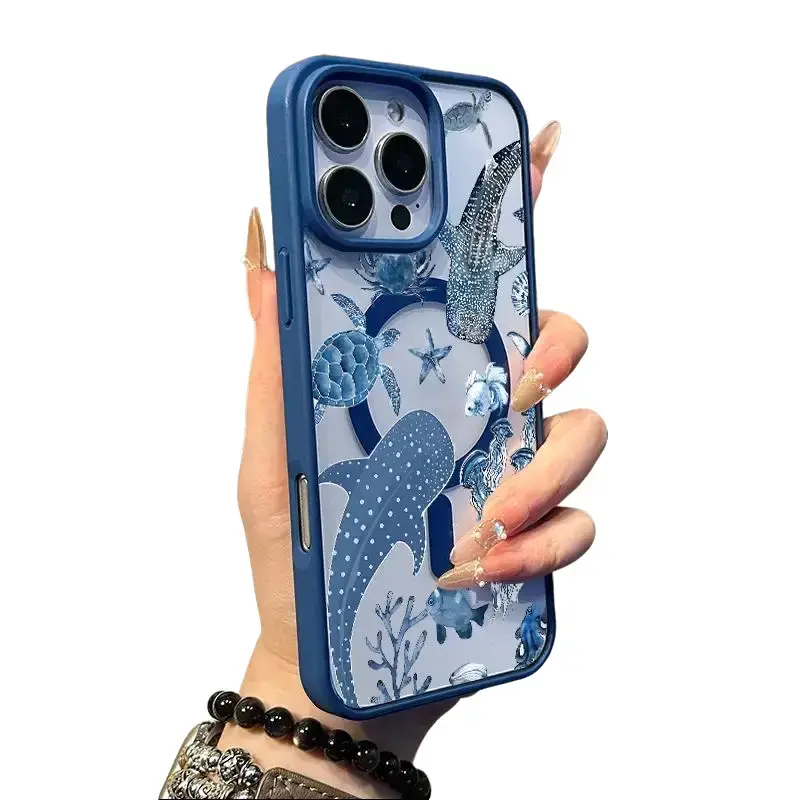
Blue Whale Shark Reef Phone Case
A layered ocean scene where the animals, coral and open blue ground share the composition.
View this exact option →Animal print: use the markings as texture
The Leopard Print Electroplated design leaves out the leopard itself. Irregular black rosettes repeat across a warm reflective-looking field, with smaller spots filling the gaps. From a distance, the design behaves like a fashion print. Up close, changes in size and spacing keep the repeat from looking mechanically stamped. The shiny border and light-catching centers shown in the catalog image add even more contrast.
Animal print is the most outfit-oriented of the three approaches because it works like a belt, shoe or bag pattern. Treat it as a neutral only if the rest of your wardrobe already treats leopard that way. Otherwise, give it one supporting color and let it be the loud element. Black, cream, camel and denim are easy companions because they repeat colors already present in the case. Adding another unrelated high-density print asks both patterns to fight for the same visual role.
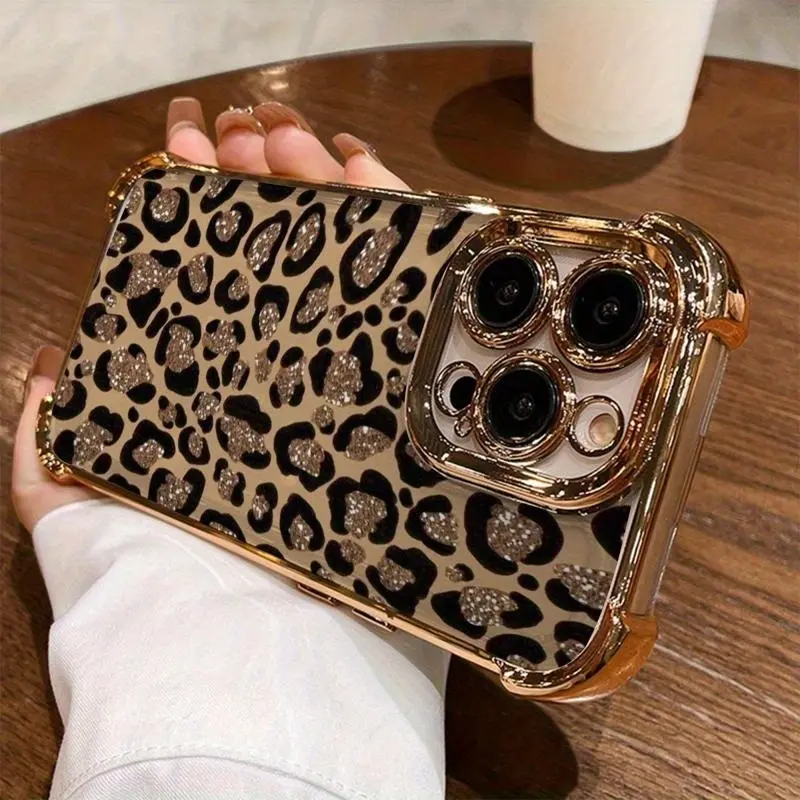
Leopard Print Electroplated Phone Case
The animal disappears and its markings become a high-contrast repeat that behaves like a fashion textile.
View this exact option →Use a three-question fitting test
Ask what should lead: a face, a place or a pattern. Then decide how much color variation you want. Portraits often concentrate attention and color around one subject; habitats distribute both; prints repeat a tighter visual vocabulary. Last, compare the case with what you carry every day. A graphic tote, patterned sleeve and busy case can look intentional, but only when their scales differ enough to create hierarchy.
The CasePop pattern-scale guide explains that hierarchy in more detail. For outfit pairing, the statement phone case guide offers a practical color-and-contrast method. You can also browse the full Western & Wildlife edit or Ocean & Nature edit to compare related designs without assuming that one style fits every animal subject.
When your own pet should be the subject
A catalog animal case expresses a visual taste; a custom pet case carries a specific relationship. If recognition matters more than illustration style, use your own photo. Choose an original image with clear eyes, visible ear shape and enough space around the head for model-specific cropping. Avoid screenshots and images already compressed by messaging apps when a full-resolution file is available.
The pet photo phone case guide covers subject selection and camera-safe placement. The photo-resolution guide helps evaluate the source file before enlarging it, and the CasePop Custom Studio provides the actual model preview. A personal photo does not need decorative filler if the expression is strong; negative space can make the portrait feel more deliberate.
The designer's conclusion
Choose a portrait when the animal's expression is the point. Choose a habitat when you want atmosphere and details that unfold over time. Choose a print when the markings matter more than the creature and the case needs to work like a fashion accessory. The best animal phone case is the one whose visual role matches the way you already dress, carry and notice things.
Questions about animal phone cases
How do I choose an animal phone case?
Decide whether you want the animal to read as a central portrait, part of a larger habitat scene or an abstract pattern. Then compare contrast, color range and how much visual attention the case should take beside your everyday clothes and accessories.
What is the difference between an animal portrait and an animal print phone case?
An animal portrait asks you to connect with one recognizable subject, including its face and expression. An animal print uses markings such as spots or stripes as a repeat, so it reads more like a textile than a picture of an animal.
Are ocean animal phone cases easy to style?
A limited ocean palette can be easy to repeat with denim, navy, silver or cool neutrals. Look at the whole composition, though: a detailed reef scene carries more visual information than a single blue animal silhouette.
Can I make a phone case from my own pet photo?
Yes. Use a clear, well-lit original image, keep the eyes and ears away from the camera opening and preview the crop on the exact phone model. CasePop Custom Studio offers a dedicated pet-photo workflow and layout guidance.