The short definition
Phone case pattern scale is the size of the artwork relative to the narrow case surface. Large-scale artwork gives one shape, word or subject most of the space. Medium-scale artwork builds a concentrated composition from several related elements. Small-scale artwork repeats compact motifs to create rhythm across the case. Scale decides what reads first, how the camera opening interrupts the picture and whether the case behaves more like a poster, an accessory or a patterned fabric.
Why scale matters more on a case than on a screen
A product image is often viewed much larger than the object itself. On a real phone, fine lines, tiny faces and narrow gaps compress quickly. The camera block also claims a meaningful piece of the top corner, while the bumper creates a hard edge around the composition. A design that looks balanced as a square image may feel crowded once it is fitted to that tall, interrupted shape.
Judge the design twice: once from arm's length, where silhouette and contrast lead, and once in your hand, where smaller details become visible. If the artwork only works during the close inspection, it will read as texture in everyday use. If one element survives both distances, it becomes the focal point. Neither result is inherently better; they produce different kinds of presence.
Large scale: let one mark own the surface
The Oversized Shadow Letter design is a clear example of poster scale. Its dark lettering runs almost the full height of the black case. The letters are not placed like a small logo with a safety margin; they are cropped by the boundaries, and the camera block overlaps the upper part of the composition. That crop is part of the attitude. You recognize the heavy geometry before you read every character.
Large-scale graphics suit someone who wants the phone to register quickly beside a plain tote, black jacket or neutral desk setup. They also demand discipline. There is no secondary pattern to disguise an awkward shift. When choosing a large word, portrait or symbol, check that the most distinctive part remains visible below or beside the camera opening. A crop can feel confident, but losing the only recognizable detail makes the design feel accidental.
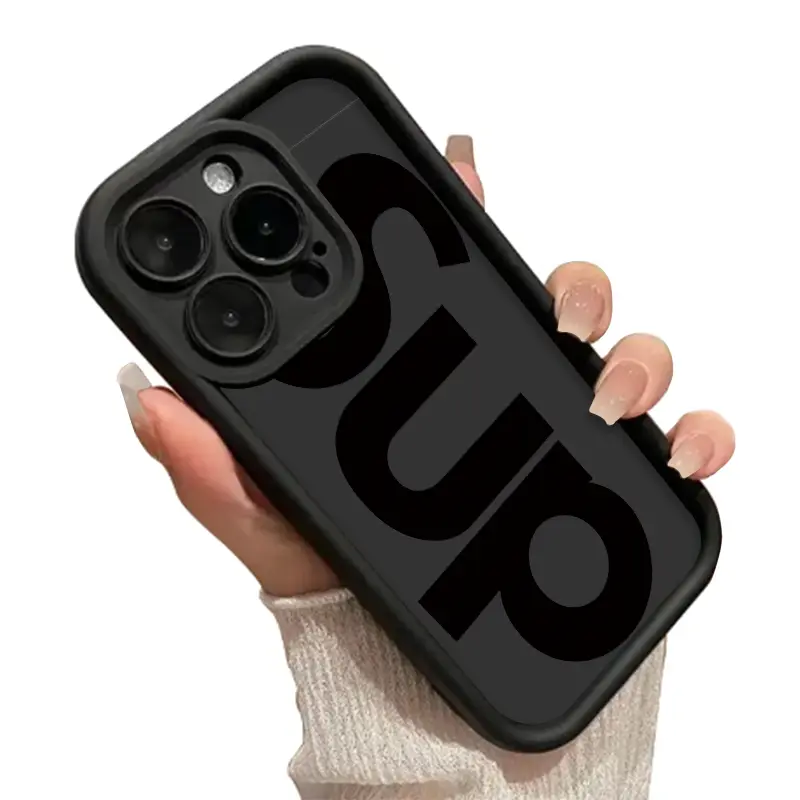
Oversized Shadow Letter Phone Case
One tonal word fills the back, so the letterforms act as both message and abstract geometry.
View this exact option →Clustered scale: build a path for the eye
The Rose Bouquet Cascade sits between a single motif and an all-over print. Many flowers form one continuous stream along the side of the case, while an open pink field keeps the arrangement from becoming a wall of detail. The eye follows the denser edge, notices the scattered petals, then returns to the larger blooms. That movement is the design.
A clustered composition is useful when you want richness without equal visual weight everywhere. It can frame the camera opening instead of fighting it, and it leaves room for a phone color, background field or quieter area to show. When comparing floral, collage or sticker-style cases, look for a clear density map: where is the artwork busiest, and where does it breathe? If every inch carries the same amount of information, the case will read as a repeat even when none of the objects literally repeats.
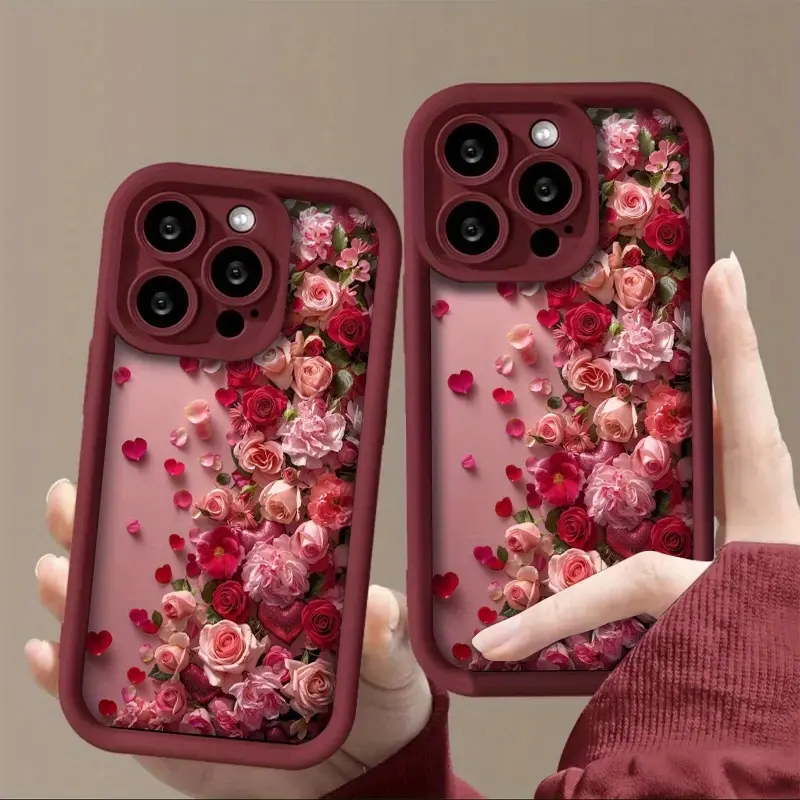
Rose Bouquet Cascade Phone Case
A dense floral edge and open center create direction, contrast and a deliberate place for the eye to rest.
View this exact option →Small repeats: choose rhythm over one hero image
The Mini Ghost Doodle design uses small black-and-white figures distributed across a clear case. No single ghost has to carry the full composition. The spaces between them are as important as the drawings because they keep the repeat legible and allow the surface beneath the clear case to participate visually. The camera opening removes part of the pattern, but the overall rhythm survives.
Small repeats are good at making a case feel playful and integrated with an outfit rather than announcing one large image. From a distance, the black-and-white marks become a light texture; up close, the individual poses appear. The risk is shrinking the motifs until their defining features collapse. A useful repeat needs variation in spacing or pose, plus enough contrast for each small element to remain recognizable at actual phone size.
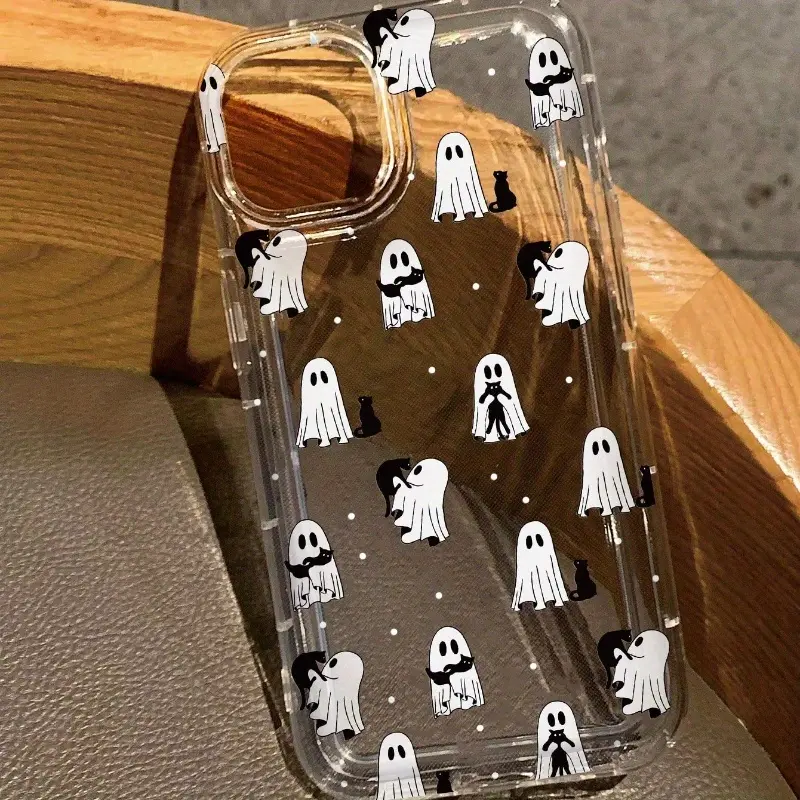
Mini Ghost Doodle Phone Case
Compact figures repeat across clear space, turning individual doodles into a light graphic rhythm.
View this exact option →Match scale to the role of the accessory
Start with the role you want the case to play. A large motif leads: it works like a graphic tee or bold bag. A clustered composition supports an outfit with color and detail while still giving the eye a focal route. A small repeat behaves more like a patterned sock, scarf or lining—noticeable, but easy to combine because no single image dominates.
You do not need to match the motif to your clothes literally. Use visual weight instead. An outfit with strong stripes or a detailed print usually needs either one simple, oversized case graphic or a quiet tonal case. Minimal clothing can comfortably hold a denser floral cluster or a field of small characters. For a broader color-and-contrast method, read the CasePop statement phone case guide. If you are comparing darker subjects and linework, the gothic phone case guide separates romantic detail from high-contrast graphics.
Use the same test for custom artwork
Pattern scale becomes even more important when you make your own case. Open the image at roughly phone size and name the detail that cannot be lost. For a pet portrait, that may be the eyes and ears; for lettering, the distinctive letter shapes; for a repeat, the smallest recognizable icon. Keep that information clear of the camera opening and outer trim shown in the preview.
Enlarge one strong subject when recognition matters. Build a cluster when several photos or drawings share one story but need hierarchy. Use a repeat when the source artwork has clean silhouettes that remain readable after reduction. The custom artwork guide covers transparent PNGs and original illustration, while the photo-resolution guide explains why enlarging a weak source file does not create detail. Both connect to the CasePop Custom Studio for model-specific previewing.
The designer's conclusion
Choose a large motif when one idea should land immediately. Choose a cluster when you want detail with a clear direction and breathing room. Choose a small repeat when rhythm matters more than a hero image. The strongest phone case pattern is not the busiest or the boldest; it is the one whose scale keeps the intended subject readable after the camera, edges and real viewing distance have done their work.
Questions about phone case pattern scale
What is phone case pattern scale?
Phone case pattern scale is the size of the artwork in relation to the case surface. A large-scale design uses one dominant motif, while a small-scale design repeats compact motifs across more of the case.
Do large or small prints look better on a phone case?
Large prints look strongest when you want immediate recognition and one clear focal point. Small repeats work better when you want texture, visual rhythm and a design that remains lively even when part of it is covered.
How does the camera opening affect a phone case pattern?
The camera opening removes a large corner from the printable field. Large subjects need a deliberate crop around it; clustered and repeating designs can absorb the interruption when important details are distributed elsewhere.
How can I choose a pattern scale for a custom phone case?
Preview the artwork at actual phone size, identify the detail that must remain readable, and check the camera, edge and magnetic-ring zones. Enlarge a single strong subject; repeat smaller elements only when each one still reads clearly.